Cypress, TX · Garage Door Service
Snapped or fraying garage door cables are common in Cypress homes built from the 1970s through the 2000s. See why, what drives the cost, and what we carry on the truck.
Most of the housing across this service area went up between 1971 and 2002, with the bulk of it dating to the 1980s and 90s across the fourteen communities we cover - places like Jersey Village nine miles out, Stagecoach at twelve, and Pinehurst at fifteen. That matters for cables because a door built in that window is old enough that its original lift cable is either near end of life or has already been swapped once by whoever owned the house before. Steel cable doesn't fail on a schedule. It fails from cycling - thousands of open-close cycles that work the strands at the drum end and at the bottom bracket until one gives.
The climate band here runs moderate on heat, which sounds mild, but it still means the cable and its galvanized coating go through real thermal swings across a year. That dries out what lubricant is left on the strands and speeds up fraying you can't see from the ground, especially on the side that gets more sun. Add a door that's original to a house built in the 80s or 90s, and you've got hardware that was fine for two decades and is now due. We see it most on one-piece and older sectional doors where the cable was never upgraded to the thicker aircraft-cable spec that newer torsion systems use.
We don't quote a number here because it depends on things we can't see until we're standing at the door - whether it's one cable or a matched pair, whether the drum or bottom bracket got damaged when the cable let go, and whether the door dropped hard enough to bend a track. A single frayed cable caught early is a straightforward swap. A cable that snapped and let the door fall is a bigger job, because the sudden drop can rack a track or crack a bottom panel, and now you're pricing more than wire.
What we can tell you: cable jobs are priced per door, not per household income bracket or neighborhood, so a call gets you an honest number before anyone touches a tool. If a spring is also worn - which is common on a door that's been cycling since the 80s or 90s - we'll flag it, because replacing a cable next to a spring that's about to go is a false economy. That's the one thing we're upfront about: we'd rather tell you a second part needs attention now than have you call us back in six months for the same door.
A cable rarely just quits with no warning. Most owners notice the door starts sitting crooked in the frame - one side higher than the other - because one cable has stretched or started to unwind from the drum while the other is still holding tension. Some hear a popping or snapping sound from the garage, usually when the door is partway open, which is often the strand giving way under load rather than all at once.
Others see it at the bottom bracket: frayed wire poking out, rust streaks running down from the drum, or a cable that's visibly loose and slack instead of taut along the track. If the door has already dropped, you'll know - it won't lift on the opener, and trying to force it manually is the fastest way to bend a track or hurt yourself. Don't run the opener repeatedly if a door won't lift smoothly; that's usually a cable or spring problem, and forcing the motor against it just burns out the opener too.
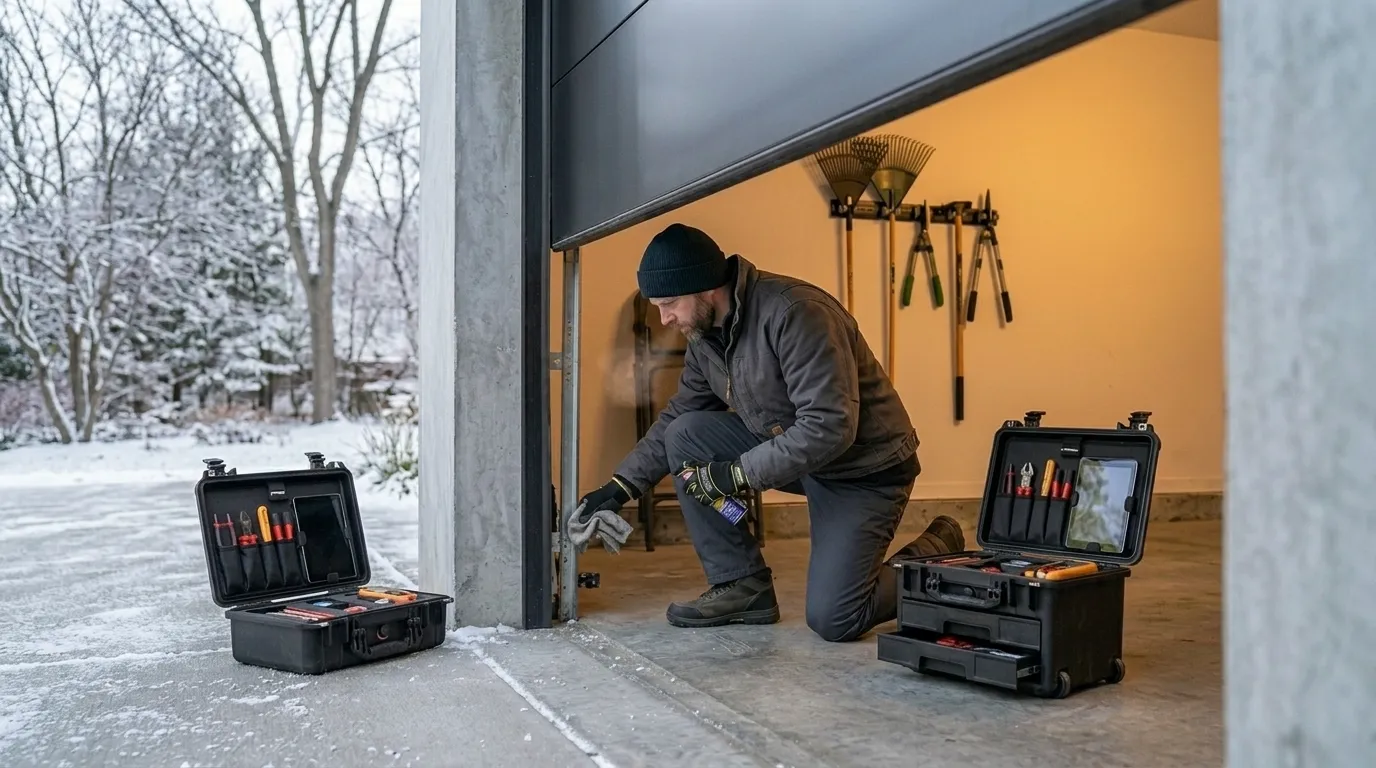
We carry standard lift cable in the gauges that match doors built from the 1970s through the 2000s, plus the newer aircraft-cable spec used on current torsion systems, so we're not waiting on a special order for either an older one-piece door or a newer sectional. That includes drums, bottom brackets, and the cable clips and fasteners that wear out alongside the cable itself rather than the cable being the only failure point.
What we don't stock on the truck is anything proprietary to a specific opener brand's cable-drum assembly - those sometimes need a day or two to source. If your door needs one of those, we'll tell you at the door, not after we've started the job.
It rarely happens with zero warning - most cables fray gradually from cycling and heat exposure, but the visible signs (rust at the drum, a crooked door) are easy to miss until the last strand gives. On a house built in the 80s or 90s, an original cable that's never been replaced is simply due.
No. A door with a broken cable can drop without warning, and trying to force it open manually risks the other cable or the track. Leave the door where it is, keep the area clear, and call for a repair rather than working around it.
A single frayed cable caught before it breaks is usually a straightforward swap. A cable that already snapped and let the door fall often means checking the track, bottom bracket, and panel for damage too, which is why we look at the whole door before quoting.
On a two-cable door, we usually recommend replacing both even if only one failed, since they're under the same load and cycling on the same schedule. Replacing just the broken one often means a second call within a year.
By Neighborhood
We also handle cable repair in these Cypress-area suburbs.
Call now or request a free quote - same-day service on most repairs, upfront written pricing.