Cypress, TX · Garage Door Service
Cable repair for Jersey Village homes built around 1991 - newer torsion setups than much of the wider Cypress area. Cypress Garage Door Pros drives the 9 miles in.
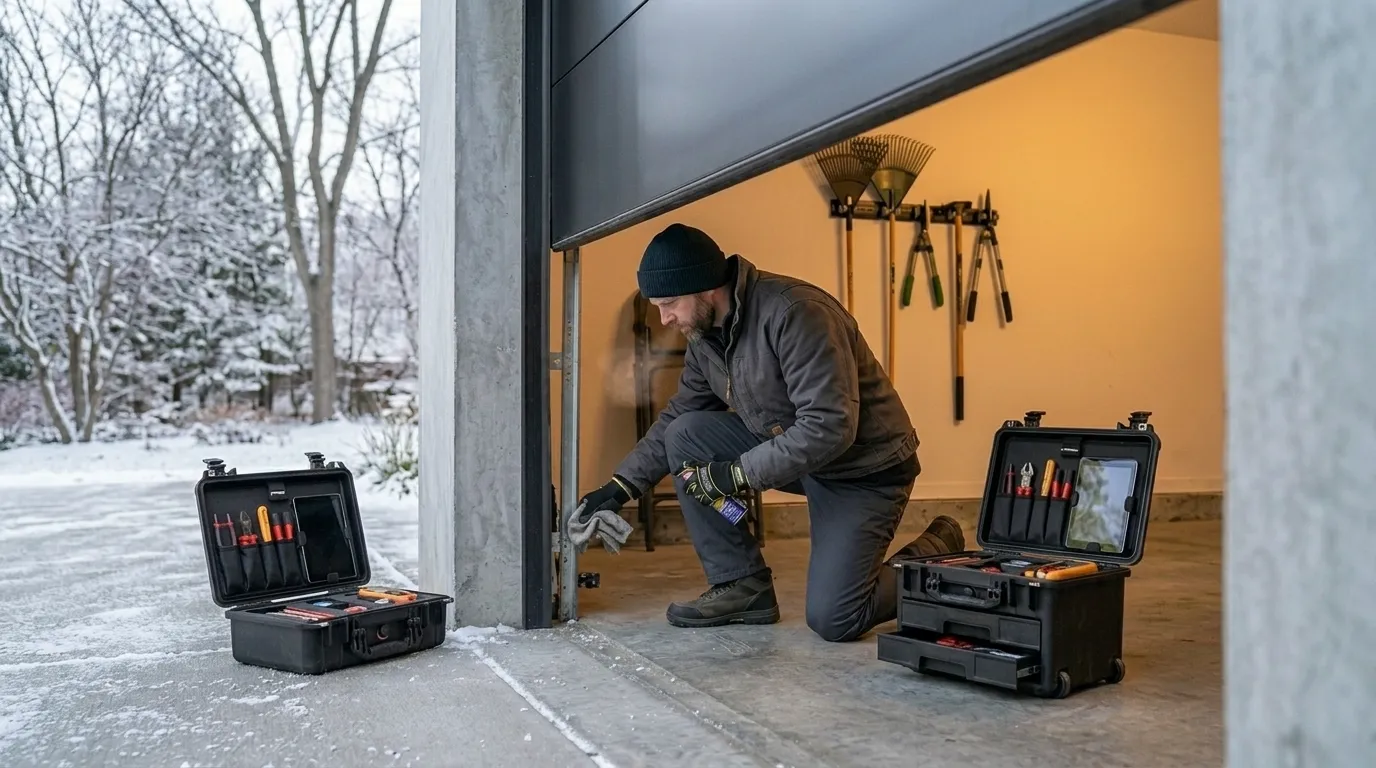
Jersey Village sits at the newer end of the build range we work across the wider Cypress service area. Housing stock here runs to a median build year of 1991, while the broader area we cover spans 1971 to 2002 with a median closer to 1988. That three-year gap sounds small, but it usually means one thing on a service call: fewer of the old galvanized aircraft-cable setups with exposed drums, more of the vinyl-coated cable and extension-spring combinations that became standard through the early '90s.
We carry both. Galvanized 1/8-inch cable for the older drum-style doors still showing up on some of the earlier-built streets, and the coated cable sized to the extension and torsion springs common on doors from '91 onward. We also stock the standard clips, drum sets, and safety cables that go with each. If your door has a stamped manufacture date from before 1985, tell us on the phone - it may need a cable size we bring specifically for that job rather than the one we default to.
What we don't carry on the truck: cable for oversized commercial doors or anything wider than a standard residential double. That's a special order, and we'll say so up front rather than pretend otherwise.
A snapped cable on a torsion-spring door usually means the door won't move at all - it's stuck wherever it was when the cable let go, sometimes half open, sometimes jammed at an angle. We come from Cypress, about 9 miles out, so the door sits like that until we arrive and get the new cable seated and the drums re-torqued.
Most cable jobs on the 1991-era hardware common here run under an hour once we're on site, since the parts and spring sizes are consistent with what we stock. Older setups on pre-1985 doors sometimes take longer if the drum or track needs adjusting to match a nonstandard cable gauge. Either way, don't try to force the door open or closed with the cable broken - that's how a drum or a spring goes next, and now it's two repairs instead of one.
On a torsion-spring door, we release tension safely, pull the old cable off the drum, run the new one, and re-tension both springs evenly so the door doesn't rack sideways when it travels. On extension-spring doors, more common on some of the older sections nearby, the cable runs to the pulley system at the top of the track instead of a drum, and that's a different sequence.
We check both cables even when only one has failed - if one side is worn through, the other is usually close behind on a door that age, and coming back out for the second cable a month later doesn't make sense for either of us. We also check the bottom brackets, since a cable failure sometimes takes a bracket with it, and torque them back to spec before we leave.
We do not replace cable and leave a spring that's clearly near the end of its cycle count untouched without saying something first - that's a judgment call we'll walk you through, not one we make for you.
A garage door cable is under real tension even with the springs unwound, and the torsion side especially has hurt people who treat it like a bike cable. We're not going to write you a walkthrough for winding a torsion drum by hand.
What you can safely do yourself: look at the cable before it snaps. Fraying strands near the drum or the bottom bracket, a cable that's gone slack on one side, or visible rust on a door that's original to a 1980s build - all of those are worth a call before the cable actually breaks and the door drops. Catching it early is a five-minute swap. Catching it after is a stuck door and possibly a bent track.
We run this call from Cypress, roughly 9 miles from Jersey Village, so there's no local branch to swing by - we're coming to the house. Have the door's approximate age handy if you know it, along with whether it's a single or double door and torsion or extension spring, since that tells us which cable and drum size to load before we leave the shop.
Households in this part of the service area report a median income around $93,983, close to the roughly $95,273 median across the 14 areas we cover, which doesn't change the repair but does mean most jobs here are straightforward replacement rather than patchwork fixes on hardware people are trying to stretch another few years out of.
The real complication is age mismatch. A door installed in 1991 sometimes got a replacement opener or track added later that doesn't match the original cable gauge - we've seen it enough on doors from this era to check rather than assume. If the drum is worn or grooved from years of a slightly wrong-sized cable, we'll say so and quote the drum along with the cable rather than sell you a cable that fails again in six months on a bad drum.
Cable gauge and drum size were fairly standard by the early '90s, which covers most Jersey Village homes at a median build year of 1991. Older doors, especially anything from before the mid-1980s, sometimes used different hardware, so we confirm the door's age before loading the truck.
No. Cypress Garage Door Pros works out of Cypress and drives the roughly 9 miles into Jersey Village for calls. There's no local depot to visit - we come to the house with the parts loaded.
Usually yes, if the door is more than a few years old. Cables wear at close to the same rate on both sides, so if one snapped, the other is often close behind. We check both before we leave rather than come back out in a month.
Only if the door is stuck open, not partway. A door stuck at an angle or halfway down with a broken cable can drop further if forced, and that risks the track or a bent panel. If you're not sure, leave it and call.
Call now or request a free quote - same-day service on most repairs, upfront written pricing.