Cypress, TX · Garage Door Service
A garage door off its track is common in Cypress homes built 1971-2002. See why it happens, what drives the cost, and the parts we stock for the repair.
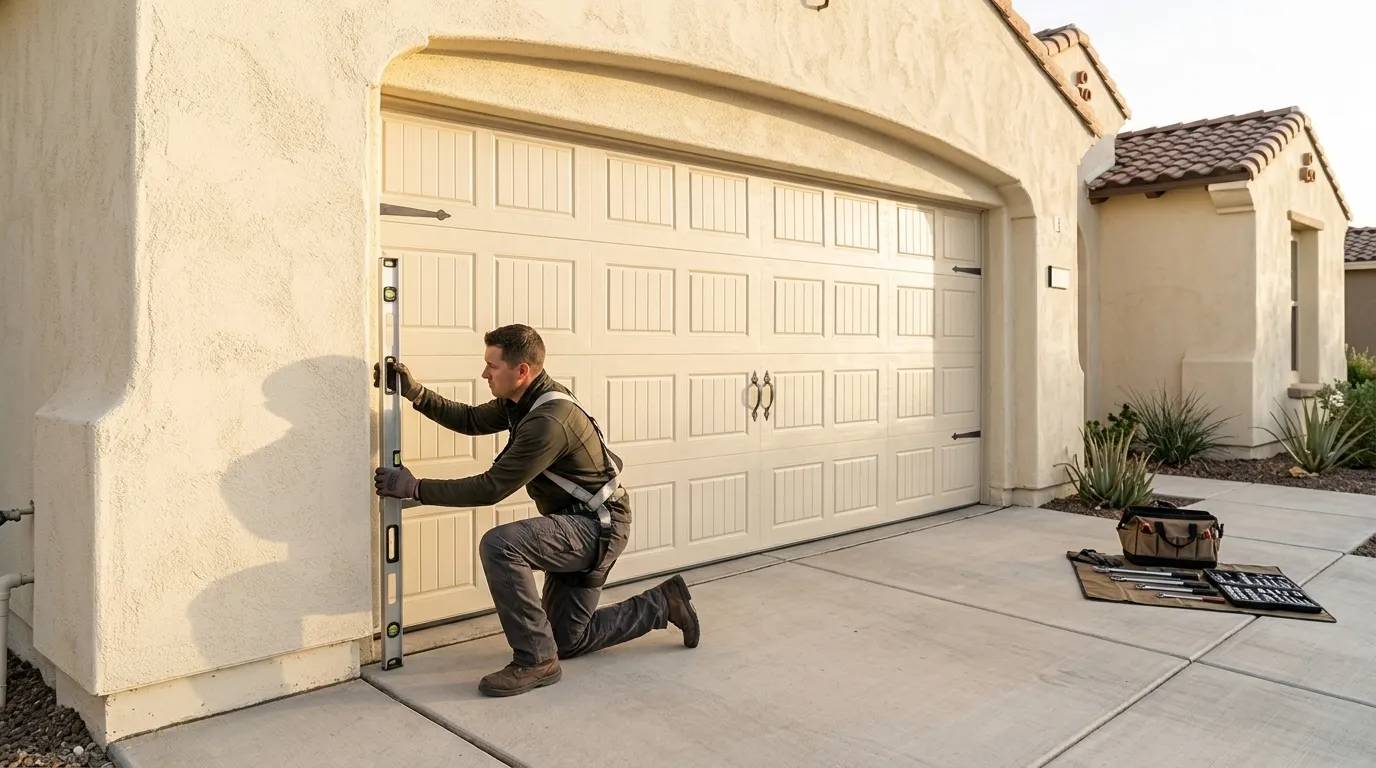
Most of the housing across this service area went up between 1971 and 2002, with the median build year landing around 1988. That means a lot of doors out here are still running on the original steel track and roller hardware from that era, or a replacement door hung on brackets that were never resquared when the house settled. Track brackets bolt to the wood door frame, and wood frames move over three decades - a little shrink, a little warp, and the track that was plumb in 1988 is not plumb now.
The climate band here is moderate heat, not the kind of freeze-thaw cycling that cracks concrete slabs and pulls anchor bolts loose the way it does further north. That's a break for this hardware, but it doesn't mean these doors get a pass. Heat cycling still swells and shrinks wood jambs season to season, and that slow movement is enough to walk a bracket out of alignment over the years, especially on the older stock that makes up a big share of the 22,419 owner-occupied houses in the area.
The other common cause has nothing to do with age: a broken cable or a snapped extension spring lets one side of the door drop while the other side is still supported, and the door binds sideways and pops a roller out of the rail. That failure shows up on doors of any age, new or original.
We don't publish a flat number here because the fix depends on what actually failed - a track that's bent but the door is otherwise fine is a different job than a track that's fine but a cable let go and bent the panel edge on the way down. What we can tell you: bracket realignment and track straightening are usually the cheaper end of the visit, and anything involving a bent panel, a torn seal track, or a broken cable that needs replacing adds parts cost on top of labor.
We give a number before we touch anything, not after. If the door has come off track more than once in the same spot, we'll say so plainly, because that's usually a sign the real problem is a spring or cable, not the track itself, and patching the track again just buys you another service call.
Honest limit: if the door panel itself is bent badly enough that it won't sit flat in the track even after realignment, straightening it isn't worth doing - a bent panel on an older door usually means the door is done, and we'll tell you that instead of billing for a fix that won't hold.
The door usually doesn't come all the way off the rail in one dramatic drop. More often it starts as a scrape or a grind partway through the cycle, a spot where the door hesitates, or a roller that's visibly hanging outside the track on one side. Sometimes it's the opener straining and reversing on its own - the safety sensors read the binding as an obstruction and stop the door rather than force it.
On older houses in this area, the tell is usually a gap that's worse at the top of the run than the bottom, which points to a bracket that's pulled away from the frame over the years rather than a sudden impact. On a door with a recently broken spring or cable, the tell is the opposite: it's fine at the top and drops hard on one side near the bottom, because that's where the unsupported weight finally wins.
Either way, once a door is riding outside its track, running the opener again is the wrong move. Forcing it can bend the track further, crack a panel, or snap a cable that's already partway gone.
We carry standard steel track sections, roller brackets, and both nylon and steel rollers on the truck, which covers most of the off-track calls in houses built in the 1980s and 90s stock that makes up most of this area. We also carry standard-lift and low-headroom track kits, since older garages here were framed for a range of ceiling heights.
What we don't stock on the truck is custom or oversized track for non-standard door widths - those get ordered once we've measured the opening, which adds a short lead time to that specific job. We'll tell you up front if that's what you're looking at rather than let you assume it's a same-visit fix.
We also carry extension and torsion spring sets and standard lift cable, since a good share of off-track calls trace back to one of those failing first, not the track itself.
We don't recommend it. A door under spring tension that's off track can drop or swing unexpectedly once you start moving it, and a bent track that gets forced back into a bracket often just bends again the first time you run the opener. Leave the opener unplugged and call it in.
No. In houses across this area, a lot of off-track calls turn out to be a broken cable or spring that let one side of the door drop, which then pulls the door sideways off the rollers. The track can be perfectly straight and the door still comes off if the cable side failed.
Housing here is mostly 1971-2002 stock, median build year around 1988, and track brackets are bolted into the wood door frame. Decades of seasonal wood movement in this climate slowly walks brackets out of square, even without any single dramatic event causing it.
Usually, if it's a standard track section, bracket, or roller - we carry those on the truck. Custom-width track for a non-standard door opening has to be ordered after we measure, so that job takes longer. We'll tell you which situation you're in before we start.
By Neighborhood
We also handle off track repair in these Cypress-area suburbs.
Call now or request a free quote - same-day service on most repairs, upfront written pricing.