Cypress, TX · Garage Door Service
Opener repair for Cypress homes built mostly between 1971 and 2002 - chain-drive units, worn logic boards, and the heat-driven wear that comes with this housing stock.
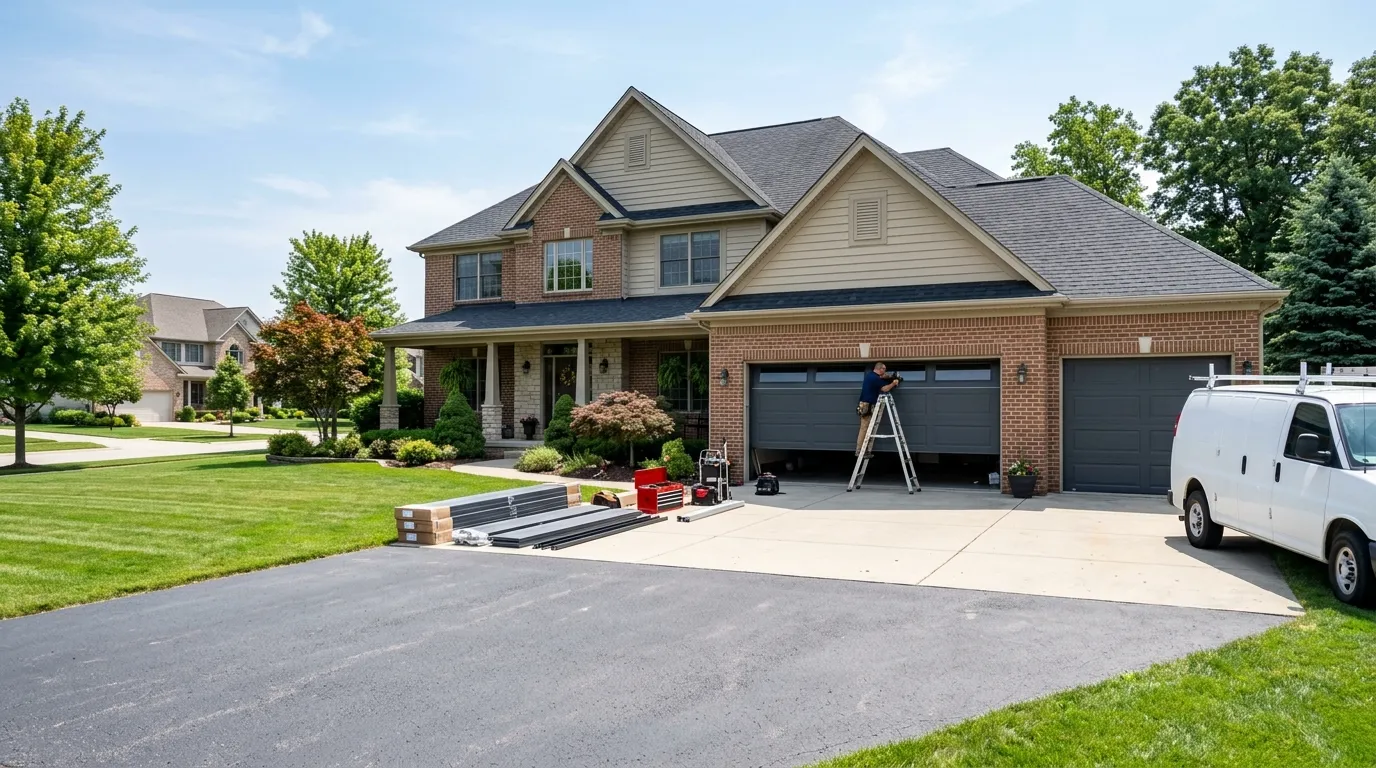
Cypress's housing stock runs mostly 1971 to 2002, with the bulk of it going up during the 1980s and 90s across the area's named subdivisions. That matters for openers because a house from that window usually still has its second or third opener, not its first - chain-drive units from that era used circuit boards and capacitors that were never built to run thirty-plus years, and a lot of them are still up there on the rail, dying slowly instead of all at once.
The climate here plays a role too. This is a moderate-heat band, not a freeze-thaw one, so the failure pattern isn't cracked housings from cold snaps - it's grease and lubricant on drive screws and gears breaking down from repeated heat cycling in an attic-adjacent garage, plus dust and humidity working into logic boards over years. That's a slower, quieter kind of wear than what you'd see in a colder climate, and it tends to show up as intermittent glitches long before the opener actually quits.
So the pattern in Cypress isn't sudden breakage - it's an opener that's been getting worse for a year and finally stops responding the way it used to. That's the call we get most: not "my door won't open," but "it used to work fine and now it's acting strange."
We're not going to put a number here that isn't tied to the actual unit in front of us - opener repair cost depends on whether the problem is the logic board, the drive gear, the sensors, or the motor itself, and those parts price differently. What we can tell you is how we think about it on site: if the opener is original to a house built in that 1980s-90s window, we're usually looking at a drive-gear or board replacement rather than a simple part swap, because those older chain-drive units don't share parts with anything made in the last fifteen years.
With a service-area median household income of $95,273 and roughly 22,419 owner-occupied houses across the area, most of the households we work in own the home outright and are deciding between a repair and a full opener swap - not stretching for either one. That decision usually comes down to age: if the unit is original to the house, a repair buys you a little time but you're likely back on our schedule within a year or two.
The honest limitation here: if your opener is that original 80s or 90s chain-drive unit and the board has failed, we sometimes can't get an exact-match board at all. In that case repair isn't cheaper than replacement - it's just slower, and we'll tell you that on the spot instead of ordering a part that won't hold.
The most common version we see: the opener runs - you can hear the motor - but the door doesn't move, or moves a few inches and stops. That's usually a stripped drive gear, which is a known weak point on the chain-drive units common in houses from this build era.
Second most common: the remote works from ten feet away but not from the driveway, or works some days and not others. That's a logic board losing its grip on the receiver signal, and on a thirty-year-old board, it's a symptom of the board dying, not a battery issue.
Third: the opener reverses immediately after closing, or won't close at all and just blinks. That's almost always the safety sensors - either misaligned from years of the garage settling, or wiring that's degraded from heat exposure over that many summers.
Less common but real: total silence, no motor sound at all. That's either a dead capacitor or a burned-out motor winding, and on units this old, both point toward replacement over repair. We'll open the housing and tell you which one it is before we quote anything.
We stock the parts that fail most often on openers of the age we're actually finding in Cypress-area garages: drive gears and gear kits for the chain and belt-drive units common to 1980s-90s installs, logic boards for the major brands still running on original equipment, safety sensor pairs and pigtail wiring, and remotes and keypads that pair with older receivers instead of forcing a full unit swap.
What we don't carry on the truck, and won't pretend to: exact-match boards for opener models that stopped being manufactured decades ago. When we hit one of those, we're upfront that a repair means sourcing a part that may take time, versus a same-day replacement with a current unit. We'd rather tell you that on the driveway than have you wait a week for a part that isn't coming.
For anything structural - the door panels, springs, or track, rather than the opener itself - that's a separate job and a separate page; this one's about what makes the motor and the electronics on your opener fail, and what we bring to fix it the day we're there.
On an opener that's original to a house from the 1980s or 90s, intermittent failure almost always points to the logic board losing its grip on the remote signal, not the remote batteries. Heat cycling over decades degrades the board slowly, so it fails in patches before it fails completely. We test the board directly rather than guessing.
Depends what's failed. A drive gear or sensor is a straightforward repair regardless of age. A dead logic board or burned motor on a unit that old often can't be matched with an exact part, so replacement ends up faster and no more expensive than chasing down obsolete stock. We'll tell you which situation you're in before quoting.
That's almost always a stripped drive gear, a known weak point on the chain-drive openers common in houses built through the 1980s and 90s. The motor spins but has nothing to grip. It's a contained repair - we replace the gear, not the whole unit - unless the motor's been straining against it long enough to burn out too.
By Neighborhood
We also handle opener repair in these Cypress-area suburbs.
Call now or request a free quote - same-day service on most repairs, upfront written pricing.