Cypress, TX · Garage Door Service
Cable repair for Waller homes built mostly around 1987, serviced from Cypress 16 miles away. Broken cables, frayed strands, off-track doors - what to expect on the call.
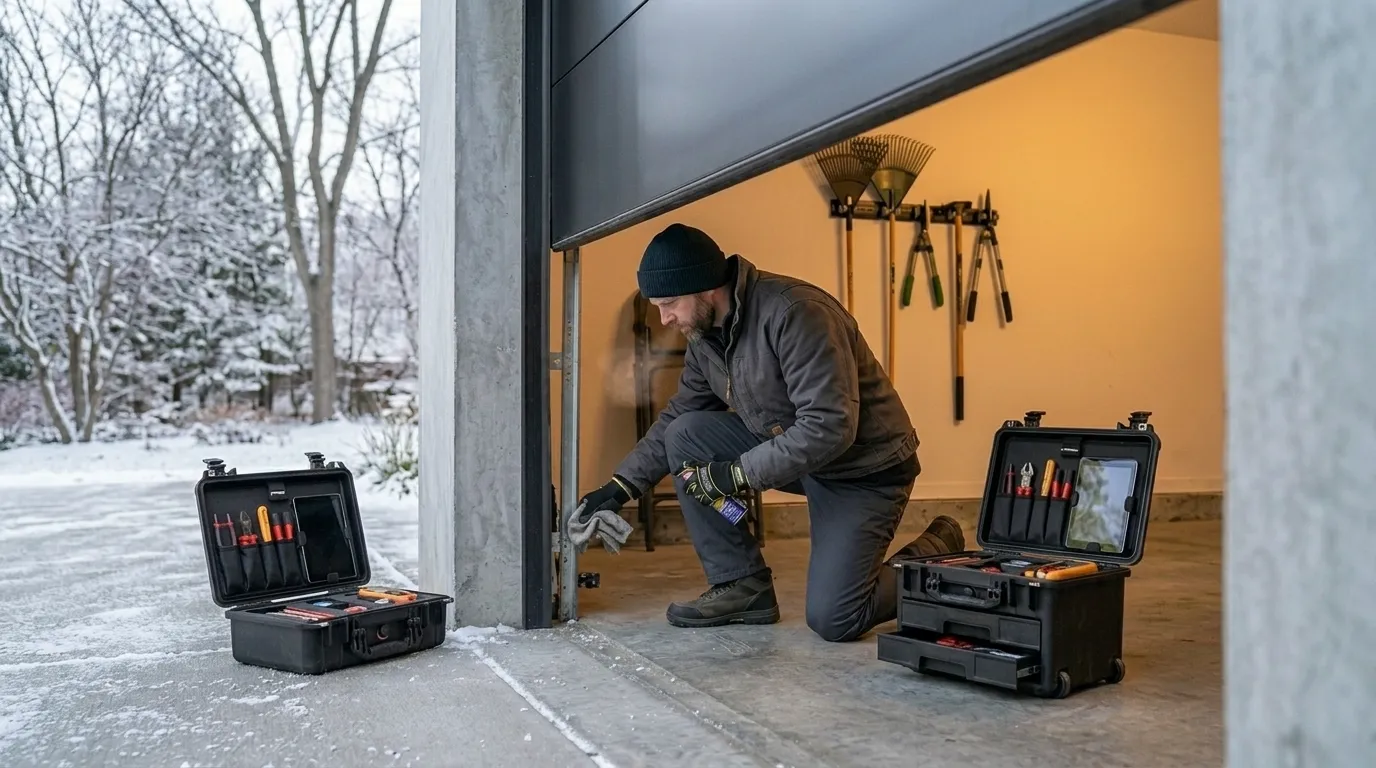
Waller sits about 16 miles from our Cypress shop, and that drive shapes how we book cable jobs out here. We don't keep a truck stationed in Waller, so a call gets slotted into the route for that day rather than dispatched on the spot. If your cable has already snapped and the door is stuck half-open or jammed on the track, tell us that when you call - a door stuck open is a security problem, and it moves up the list ahead of routine tension adjustments.
We don't sell same-day arrival as a guarantee here the way a shop based in Waller itself might. What we can tell you honestly: the 16-mile trip means we plan the visit, we don't wing it, and that usually means one appointment window rather than a vague afternoon. If a cable is frayed but holding, it's worth booking ahead of a full failure rather than waiting for the door to come down on one side.
Bring us the make of the opener and a phone photo of the drum and cable if you can get one safely - it saves a second trip for the right cable diameter and length, since residential lift cable isn't one universal size.
Most of the housing on the Waller side of our service area went up around 1987, which puts a lot of doors on original or first-replacement torsion hardware from a build era before galvanized coating and drum design got standardized the way they are now. That matters for cable repair specifically: the cable drums on doors from this period are sometimes a slightly different diameter than what's stocked on the truck for newer builds, and matching the wrap pattern wrong leads to a cable that looks fine going on and then jumps the drum within a few open-close cycles.
The other complication is scale. Waller itself carries around 1,177 households in the pockets we serve, a fraction of the broader area's 35,410 - Cypress Garage Door Pros services F6. That's not a knock on the town; it just means cable failures here are less common events per street, so when one happens, the owner is usually dealing with it for the first time and doesn't have a stocked spare spring or cable kit sitting in the garage the way a landlord managing several units might.
We carry standard-length lift cable on the truck, but if your drum turns out to be a nonstandard size from that late-80s hardware, we may need to order the exact match rather than force a fit - that's the honest limitation, not a sales pitch.
The area sits in a moderate-heat climate band, which is kinder to lift cable than deep freeze-thaw cycles are, but heat still does its work over three-plus decades. Galvanized coating on a cable installed around 1987 has had a long run of expansion and contraction by now, and the fraying we see on these calls tends to start at the drum end, where the cable takes the sharpest bend under load every single cycle.
Median household income in Waller runs around $37,163, well under the $95,273 median across the wider area we cover. That gap doesn't change how a cable fails, but it changes the decision an owner makes when it does - replacing a single cable and having the opener re-balanced is usually the right call here, and we'd rather make that repair than push a full door replacement when the door itself still has years left in it. The panels and track are often fine even when the cable and springs are shot.
We don't glamorize this. A cable is a cheap part relative to the whole door, and it fails because it's a moving steel wire under constant tension, not because of anything the homeowner did wrong.
A cable that's on its way out rarely fails without warning, though the warning is easy to miss. Look for a door that closes slightly crooked, dipping lower on one side than the other, or a soft grinding sound near the top corners as the door travels. Fraying strands - thin wire ends sticking out from the cable near the drum - mean replace it now, not next month.
A full snap is loud. If you hear a bang and the door drops or hangs stuck at an angle, don't try to force the opener through another cycle; that's usually how a cable jumps its drum entirely or takes the other side's tension with it. Disconnect the opener, leave the door where it is, and call.
On double doors especially, one cable going means the whole door is now unbalanced, and running it further risks bending the track or racking the panels - turning a cable job into a bigger one. If your garage was built anywhere near 1987, treat a slow, uneven close as the early sign, not a quirk to live with.
It's about 16 miles. We don't keep a truck based in Waller, so we route the visit into that day's schedule rather than dispatch immediately. If your door is stuck open or a cable has already snapped, say so when you call - that moves ahead of routine adjustments.
Usually, yes, but houses from around 1987 sometimes have drum diameters that differ from newer standard stock. If yours doesn't match what's on the truck, we order the correct length rather than force a wrong-size cable onto the drum.
Almost never. The cable is a wearing part, not a structural one. If the panels, track, and opener are sound, replacing the cable and rebalancing the springs is the right fix - full door replacement is rarely the answer for a cable failure alone.
Stop using the door. Disconnect the opener if you can do it safely, leave the door in whatever position it's in, and call. Running the opener again on a snapped cable can bend the track or damage the other side's hardware.
Call now or request a free quote - same-day service on most repairs, upfront written pricing.