Cypress, TX · Garage Door Service
Torsion spring repair for Waller homes built around 1987 - original hardware is nearing 40 years of cycles. Cypress Garage Door Pros travels the 16 miles to fix it.
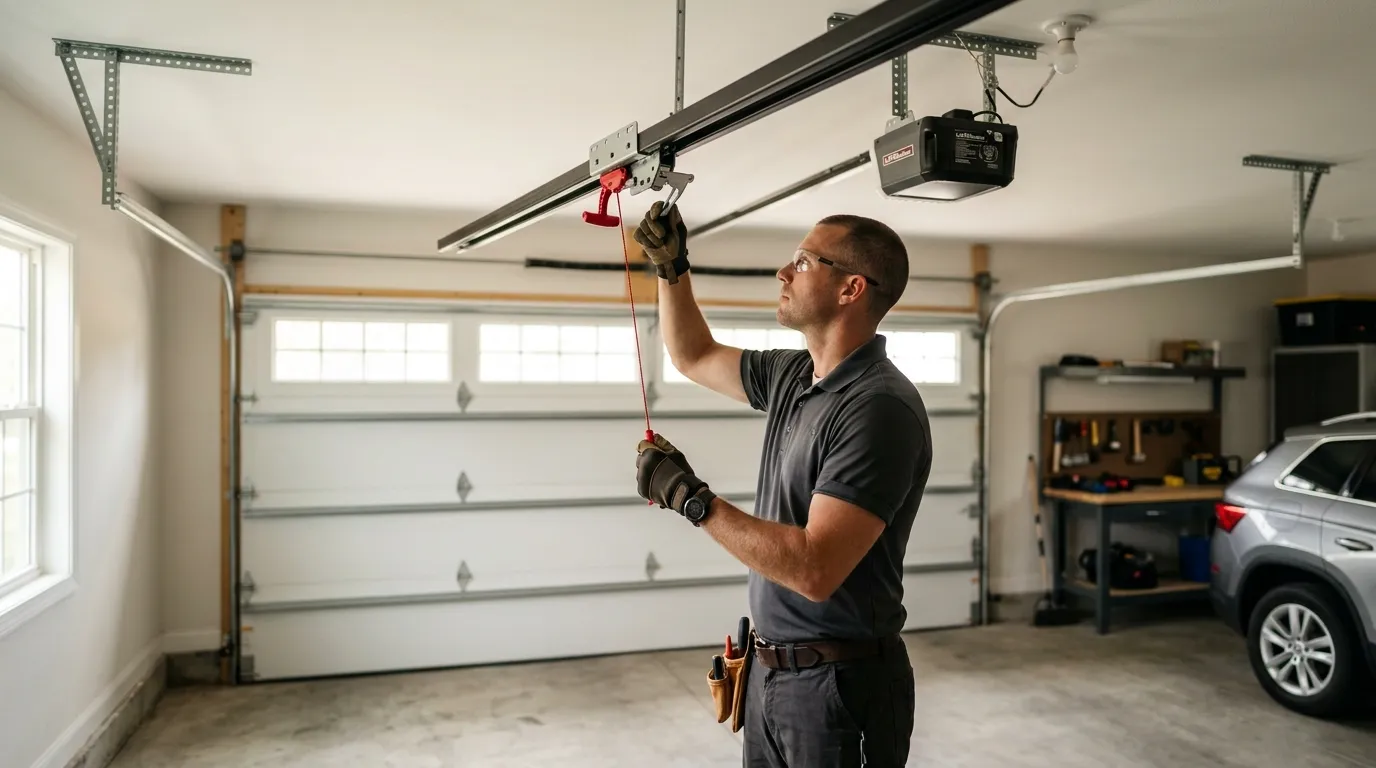
We run this job out of Cypress, about 16 miles from Waller, so there's no local branch to call - just a truck that comes out when you need it. Because we're driving in rather than sitting a mile away, we ask a few questions up front: is the door stuck open or stuck shut, is it a single or a double, and how old is the house. That last one matters more here than in most of our service area, because Waller's housing stock centers on 1987, and a door that old is usually running its original torsion spring, not a replacement.
We don't stock every spring size on the truck for every job - some double-door torsion setups on older openers need a part ordered ahead, and we'll tell you straight if that's the case rather than promise same-day when it isn't realistic. If your spring has already snapped and the door won't move, say so when you call; that changes what we bring.
We link out to what we cover near Waller and to the general Cypress spring repair page if you want the fuller service rundown - this page is just about the spring itself.
A 1987-built house is pushing 38 years on its original garage door hardware if nobody has touched it. Torsion springs are rated in cycles, not years, but a door that's opened twice a day for four decades has put a lot of wear on a coil that was never meant to last forever. When it finally lets go, it's rarely a slow fade - it's a sudden loud bang and a door that either won't budge or drops fast when you try to lift it by hand.
The complication in a lot of Waller's stock from this era is the extension-spring setup some builders used instead of torsion, especially on single-car doors. Extension springs sit along the horizontal track and fail differently - frayed cable first, then a spring that lets go under tension. If yours is one of these, the fix and the parts are not interchangeable with a torsion job, and guessing wrong wastes a trip.
We won't swap a spring on a door with a bent track or a cracked panel and call it done - if the door's frame is out of square, a new spring just fails again faster, and we'll say so before we quote the smaller job.
Waller's median year built sits at 1987, which puts a big share of the area's doors right at the point where original torsion or extension springs are aging out on cycle count alone, not because anything was installed badly. Across the wider Cypress-area housing stock, most homes date from 1971 to 2002 with a median around 1988 - Waller tracks close to that midpoint, which means the spring failures we see out there are less about one bad batch of hardware and more about an entire generation of doors hitting the same wear point around the same time.
The area's climate band is moderate heat, not the swings that crack coating on metal fast, so most of what we find is straightforward mechanical fatigue - a spring that's simply cycled out - rather than corrosion damage. With 1,177 households in Waller and a median income of $37,163, we hear a clear preference for fixing the spring itself rather than replacing the whole door, and on a door that's otherwise sound, that's usually the right call.
The most common call is a door that suddenly feels twice as heavy - you go to lift it manually and it barely moves, or the opener strains and stalls partway up. That's a spring that's lost its tension, and on a torsion setup it often comes with a visible gap in the coil once you look up at the bar above the door.
Second most common: a loud bang from the garage, usually early morning or evening when the temperature's shifting, followed by a door that won't open at all. That's the spring letting go outright, and it's not a DIY fix - a torsion spring under load can do real damage if you don't know how to unwind it.
Less common but not rare on the older extension-spring doors: a frayed or snapped cable hanging loose along the track, door crooked on one side. That one usually means the spring already went and the cable's been carrying weight it shouldn't.
Most of Waller's houses date to around 1987, so a lot of the springs we replace are original hardware pushing close to 40 years of cycles. Age alone doesn't guarantee failure, but it's the single biggest factor we see on service calls out there.
We carry common torsion spring sizes, but some double-door setups on older openers need a part ordered ahead. We'll tell you on the call whether your job is a same-visit fix or needs a second trip for parts.
Usually not, if the panels and track are sound. A spring is a mechanical part that wears out on schedule; replacing just it is the cheaper and faster fix on a door that's otherwise in decent shape.
Torsion springs sit on a bar directly above the closed door. Extension springs run along the horizontal tracks near the ceiling. Telling us which one you have when you call helps us bring the right part.
Call now or request a free quote - same-day service on most repairs, upfront written pricing.