Cypress, TX · Garage Door Service
Garage door repair and service for Mission Bend's 10,915 households, most built around 1986 - torsion spring, opener, and track work from a crew that drives in from Cypress.
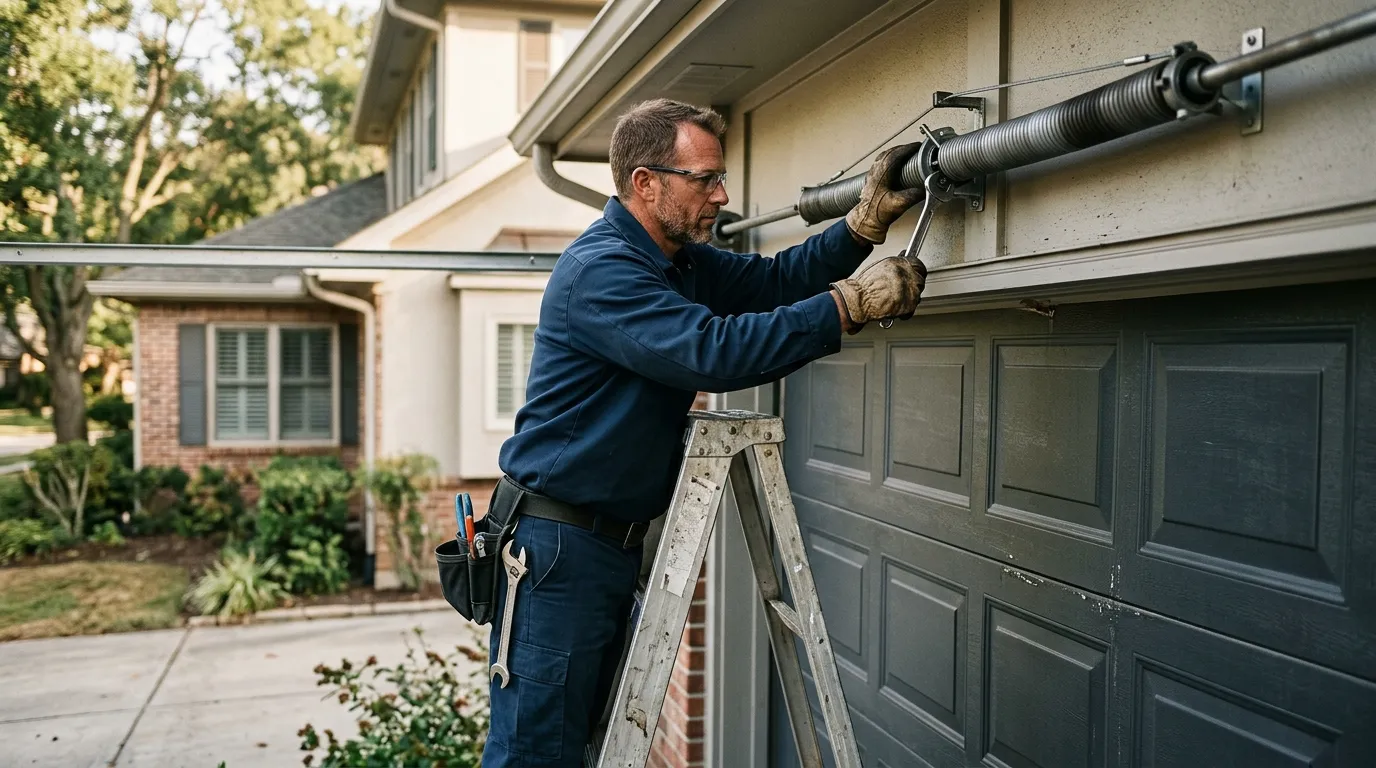
Mission Bend is a real neighborhood, not a strip mall - 10,915 households, which is enough houses that the same handful of faults show up over and over on doors built the same year. You can do some of this yourself. Tightening loose hinge bolts, cleaning and lubricating rollers, checking that the photo-eye sensors near the floor are aligned and not caked in dust - all of that is fair game with the opener unplugged.
What you should not touch is the torsion spring above the door or the cables running down the tracks. Those are wound under enough tension to break a wrist or worse, and on a door this size that tension doesn't forgive a guess. If the door is heavy to lift by hand with the opener disconnected, that's a spring problem, not an opener problem, and it's not a DIY afternoon.
One honest limitation: if your opener is original to a mid-1980s build and the logic board has failed, we may not carry that exact replacement board on the truck. Full opener swaps are common on houses this age and we'll tell you straight if that's where this is headed rather than chasing a part that's been discontinued for years.
Most houses in this part of the service area went up in the 1986 range, inside the broader 1971-2002 stretch we work across. That means a lot of Mission Bend doors are on their second or third opener but still running original torsion hardware sized for the door that came with the house - steel sectional panels, standard-lift track, single torsion spring on most single-car doors and dual springs on doubles.
The repair itself is usually one of three things: the spring has fatigued and snapped (most common on a door that age), a cable has frayed at the bottom bracket, or a roller has seized in the track and started binding the whole system. We measure the spring by wire size, coil diameter, and length rather than by what looks close - a spring one size off will either strip the opener trying to lift the door or leave it too light and prone to slamming.
We don't recommend patching a spring system with a mismatched part just to save a visit. On a door this old, once one spring goes, the other is usually close behind, and doing both at once costs less in trips than doing them one at a time.
A straightforward spring or cable job is usually a same-visit fix once the truck is on-site - the work itself doesn't take long, the tension release and reset is the bulk of it. Where the wait comes in is parts. If your opener's circuit board or a specific panel section needs ordering rather than pulling off the truck, that can add days, not hours, and we'd rather tell you that up front than have you standing in the driveway wondering.
Because the door won't lock from outside without power to the opener or a working manual latch, we'll walk you through securing it in the meantime rather than leaving you exposed overnight. That's a real gap in a repair like this and it's better to name it than pretend it doesn't exist.
We run out of Cypress, about 19 miles from Mission Bend, so there's no local branch to swing by - the truck comes to you. That distance is part of why we ask for a decent description of the fault when you call: is the door stuck open, stuck shut, off track, or just noisy. Knowing that before the truck leaves means we come with the right spring and cable stock for a door your house's age instead of guessing.
See our Mission Bend service area page for what we cover nearby, or the main Cypress garage door service page if you want the full rundown of everything we do beyond repair.
On a house built around 1986, the failure pattern is pretty consistent. The spring goes first, usually announced by a loud bang from the garage and a door that suddenly weighs twice as much. Next most common is a cable fraying at the bottom bracket, which shows up as the door hanging crooked, low on one side. After that it's rollers - steel rollers original to a door this age wear grooves into the track over enough years and start grinding instead of rolling.
Moisture isn't the main driver of failure here the way it is in wetter climates; the heat load through the summer does more to dry out lubricant and stiffen springs than rust does to eat metal. That's part of why a yearly lube and tension check catches problems before they turn into a snapped spring at six in the morning.
Most houses in this part of the service area were built around 1986, inside the broader 1971-2002 range we see across the wider area. That means original torsion springs, steel sectional panels, and openers that have often been replaced once or twice already but sit on hardware sized for the original door.
No. We run out of Cypress, about 19 miles away, and the truck travels to you. There's no local office to visit, but we stock spring and cable sizes common to houses built in the 1980s and 90s so the truck usually has what a house this age needs.
We don't recommend it. A wound torsion spring holds enough force to cause a serious injury if it releases wrong, and matching wire size, coil diameter, and length matters more than it looks. Lubricating rollers and tightening hardware is fine to do yourself; the spring and cables aren't.
That's almost always a broken or fatigued torsion spring, not an opener fault. On a door built in the mid-1980s range, this is one of the most common failures we see, since the original spring has usually been carrying the load for decades.
Call now or request a free quote - same-day service on most repairs, upfront written pricing.