Cypress, TX · Garage Door Service
Cypress homes built between 1971 and 2002 carry torsion springs that were never sized for the metal to contract fast in a sudden cold snap. Here's what actually happens.
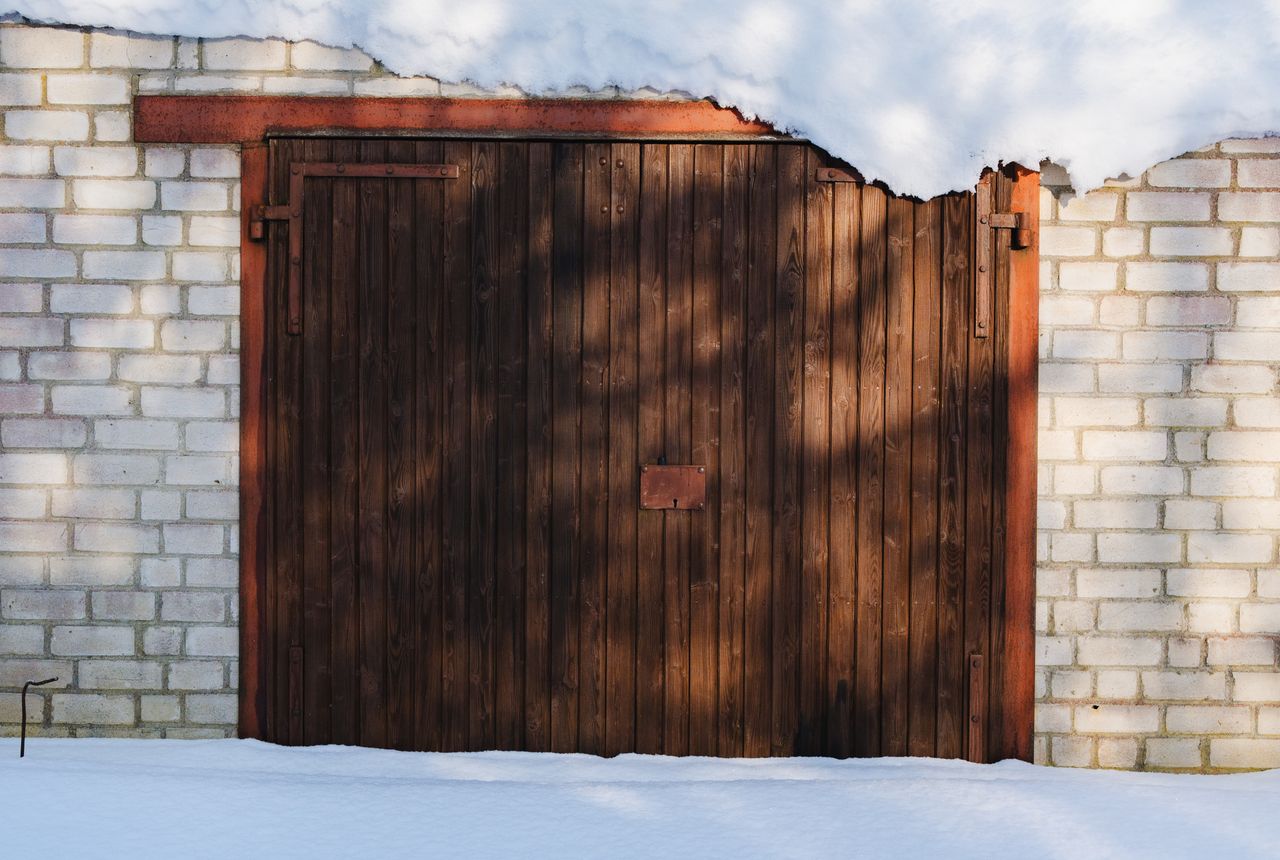
Most of the houses we get called to in this part of the service area went up between 1971 and 2002, with the bulk of that stock dating to the 1980s and 90s across the fourteen named communities we work in. That matters because a torsion spring installed on a house built in that window has been sitting on the same shaft, under the same tension, for twenty to fifty years. Steel doesn't stay young forever. It fatigues with every cycle, and a spring that's already near the end of its life doesn't need much of a push to let go. A sudden temperature drop is exactly that kind of push. The spring isn't failing because of the cold itself so much as the cold exposing a weakness that was already there. We see this pattern more in the older 1970s and early-80s builds than in the newer end of that range, simply because those springs have logged more winters and more open-close cycles. If your door was installed anywhere in that thirty-year window and nobody's touched the springs since, cold weather is when you find out.
This area sits in a moderate heat climate band, not a harsh-winter one, so the swings that hurt springs here aren't deep freezes lasting weeks. They're the short, sharp drops - a warm stretch followed by one cold morning - that shrink the metal fast instead of slowly. Steel contracts as it cools, and torsion springs are already wound tight under load. A quick contraction adds stress right at the moment the spring has the least give left in it. In a climate that stayed warm year-round, that stress event just wouldn't happen as often. Because our winters bounce - mild for weeks, then one sharp cold morning - the springs here get that shock a handful of times a season instead of once. It's not the temperature number that matters as much as the speed of the change, and that's a pattern of this climate band, not a universal rule.
Because the housing stock across this service area is concentrated in that 1971-2002 build window, a lot of these garage doors were installed with the standard torsion hardware of whatever decade they went in - and a lot of that original hardware is still on the door. Nobody swaps a spring on a schedule; they swap it when it breaks. So the age distribution of the houses tells you a lot about the age distribution of the springs still in service. A door on a house built in the late 1980s, which is the median for this area, likely has hardware old enough that any cold-morning stress event is working against metal that's already fatigued. We're not saying every door here is at risk - plenty have been serviced or replaced - but the math of a thirty-year-old housing base means a meaningful share of doors are running on original or near-original springs, and those are the ones a sharp temperature drop tends to find.
If a spring lets go on a cold morning, don't try to force the door open or closed - a broken torsion spring on a double door especially can drop fast and hard once the cable side loses tension. Look at the spring itself first: a clean gap in the coil is a broken spring, full stop, and the door needs a new one, not a repair. If the spring looks intact but the door is hard to lift, that's more likely a track, roller, or cable problem than a spring problem, and it's worth checking those before assuming the worst. One honest limit here: we can't tell you over the phone whether a spring is original to a 1980s build or was replaced ten years ago, and that age is what decides whether we're looking at a quick swap or a sign the opener and hardware need a closer look too. With roughly 22,419 owner-occupied houses across this area, we see this exact call pattern often enough to know it's rarely just the spring alone.
It's usually not the first cold morning that causes it - it's the last straw after years of cycling. Steel contracts fast when temperature drops quickly, and a spring already worn from age or heavy use has less give left to absorb that stress. Houses built in this area's common 1971-2002 window often have original hardware, which is exactly the kind of spring most likely to give out.
If your door has two torsion springs and they're the same age, which is typical on original hardware from the 1980s-90s stock common here, replacing just one leaves a mismatched pair under different tension. That's not a hard rule for every door, but on original-age hardware it's usually the more sensible call.
A moderate heat climate band means we don't get the deep, sustained freezes that some regions do, but the sharp short-term drops that do happen still put stress on aging metal. It's less frequent than in a harsh-winter climate, but it's not zero, especially on hardware that's decades old.
Call now or request a free quote - same-day service on most repairs, upfront written pricing.