Cypress, TX · Garage Door Service
A Cypress, TX garage door service call covers spring, opener, and track checks tuned to the area's 1971-2002 housing stock and moderate-heat climate.
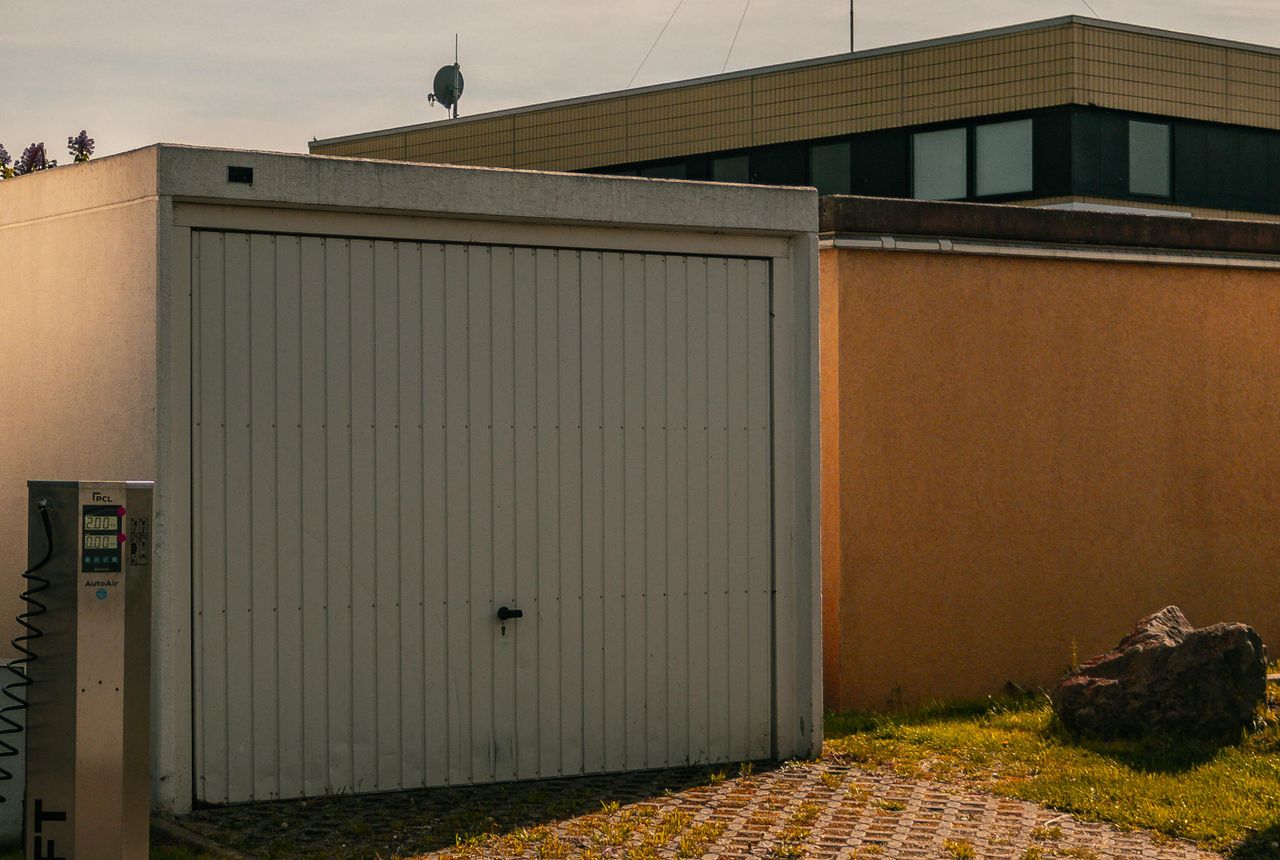
Most houses on this side of Cypress went up between 1971 and 2002, with the median build year landing around 1988. That's a wide window, but it puts a large share of the openers and torsion springs still in service well past their design life. Across the fourteen named areas that make up this service territory, the stock leans 1980s-90s, which is a specific era of construction: steel-and-wood panel doors, chain-drive openers with the smaller motors that were standard then, and torsion springs cycle-rated for something like 15-20 years of daily use that many homes have already doubled or tripled without a swap.
A service call in this kind of housing stock rarely starts from zero. Usually there's a door that's been closing a little slower every month, or a spring that groans on the way up. We're not walking into unknown territory - the age band is consistent enough across Cypress that we can make a reasonable guess about what's likely worn before the truck even pulls up, though we still check everything rather than assume.
Cypress falls in a moderate-heat climate band - not the extreme heat you'd get in a desert climate, but warm enough that summer temperatures work steadily on garage door hardware. Heat makes steel expand: track brackets loosen slightly, and a torsion spring's effective tension shifts a little as the metal warms, which is part of why an opener that ran fine in February can start straining, reversing, or stalling on a hot afternoon in July or August.
Grease-based lubricant on rollers and hinges thins out and runs off the metal faster during sustained heat, leaving bare metal to grind against bare metal. Circuit boards inside garage door openers - especially the older units common in that 1980s-90s stock - don't hold up well to heat soak inside a closed, unshaded garage. Capacitors degrade faster under repeated heat cycling, and safety-sensor brackets can drift out of alignment as the metal they're mounted to expands and contracts through the day. None of this shows up as a dramatic failure at first. It shows up as a door that's slightly worse every summer until one day it isn't slight anymore.
With a median household income of $95,273 across the service area and 22,419 owner-occupied houses among 35,410 households, a lot of what we get called out for is deferred maintenance on original equipment rather than storm or impact damage - wear that a moderate-heat climate has been working on slowly against hardware that's often 30 to 50 years old. Homeowners here tend to hold off on upgrades - insulated panels, quieter belt-drive openers - until the original chain-drive unit actually fails, rather than replacing ahead of the problem. That's a reasonable financial call, but it means the failure we get called for has usually been announcing itself for months: grinding rollers, uneven travel, a door that only sticks in the afternoon.
Because the fourteen areas we cover run through the same general 1980s-90s construction window, a service call in one part of Cypress often mirrors what we saw the week before somewhere else nearby. That consistency helps us diagnose faster, but it doesn't mean every door is the same - a spring replaced five years ago behaves differently than one that's original to the house.
Before we get out to the house, there are a few things worth checking yourself. If the house dates to the 1980s or 90s window common in Cypress, look at the torsion spring first - it's usually the single component rated for a shorter service life than the door has actually been in the garage. Grinding on the rollers is usually cooked-off lubricant from summer heat rather than a broken part. If the opener reverses or stalls only in the afternoon, that's a heat-load symptom in the motor or board, not a mechanical fault, and it calls for a different fix than a jammed track would.
One honest limit: we don't rebuild a 30-year-old chain-drive opener board from scratch. Circuit boards for openers that old usually aren't stocked anymore, and by the time a board starts failing the motor and gearing aren't far behind. At that point a full opener swap makes more sense than a patch repair, even though it costs more up front.
Heat soak inside a closed garage affects the opener's circuit board and motor before it affects anything mechanical. In Cypress's moderate-heat climate, afternoon temperatures inside an unshaded garage can push an aging board past where it holds steady, so it stalls or reverses. It usually isn't the track or the door itself.
If your house was built in the 1980s or 90s range common across Cypress and you've never had spring work done, it's likely original. Torsion springs are rated for roughly 15-20 years of daily cycling, so an original spring in a house from that era has usually gone well past its rated life.
Not usually. Boards for openers from the 1980s-90s era common in this area aren't widely stocked anymore, and once a board starts failing, the motor and gearing tend to be close behind. Past a certain age, replacing the opener costs less in the long run than chasing board failures one at a time.
Call now or request a free quote - same-day service on most repairs, upfront written pricing.